Dead Limbs Hanging in the Canopy
Deadwood is the first thing we look for and the easiest one to spot in summer, when the dead branches are the ones with no leaves. A few small dead twigs on an old tree is normal. What is not normal is a dead limb thicker than your arm still attached up in the crown. Those come down on their own schedule, usually in the first real wind, and they land wherever they land.
The other thing deadwood tells you is why it died. Scattered deadwood through one side of a crown often means a root problem on that side, or a wound in the trunk cutting off the supply. The limb is the symptom rather than the disease, and that is worth knowing before you decide what to do.
A Lean That Has Gotten Worse
Trees lean. Plenty of healthy trees have leaned the same direction for forty years, reaching for light or shaped by wind, and they are fine. The dangerous version is a lean that changed. If the tree sits at an angle it did not sit at two seasons ago, the root plate has moved, and roots do not move back.
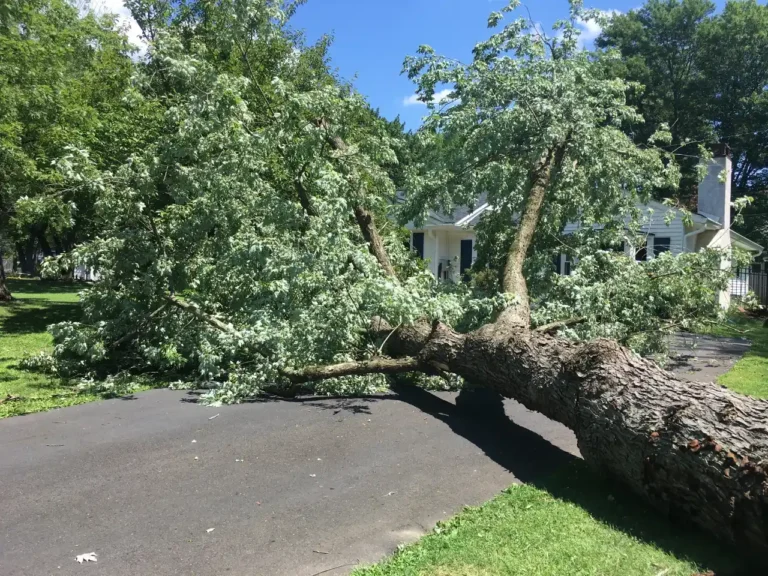
Look at the ground on the high side of the lean. Cracked soil, a raised hump of turf, or exposed roots lifting on that side means the plate is already failing. That tree does not get climbed and it does not get left through another storm season. In wet ground, which covers a lot of Massachusetts, a new lean after heavy rain is one of the most reliable warnings there is.
Cracks, Cavities, and Missing Bark
A vertical crack running down the trunk is the one that gets ignored most often, because from twenty feet away it looks like normal bark texture. Up close it is a split, and a split trunk carries a fraction of the load it used to.
Cavities matter less than people expect and more than people hope. A hollow trunk can stand for decades if the outer shell is thick and sound, since strength lives in the outer wood. What matters is how much solid wood is left around the hollow. Missing bark is the third one. A patch of bare wood on the trunk means that section stopped moving water years ago, and decay usually started underneath it long before the bark fell off.
Mushrooms and Soft Wood at the Base
Mushrooms growing out of the trunk flare or the roots are not a garden feature. They are the fruiting body of a fungus that has been eating the inside of that tree for years, and by the time they appear on the outside, the damage underneath is well along.
Shelf fungi on the lower trunk are the ones we take most seriously. Push a screwdriver into the wood at the base. If it goes in easily where it should meet solid wood, that is root or butt rot, and a tree with rot at the base fails without bending first. It goes over whole. That is why decay low on the trunk outranks almost every other sign on this list.
What to Do Next
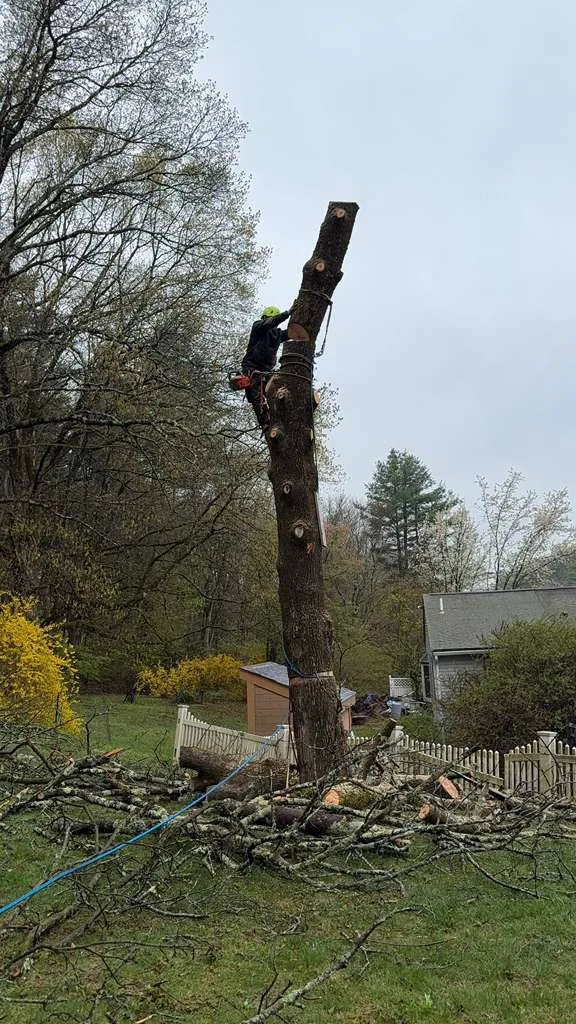
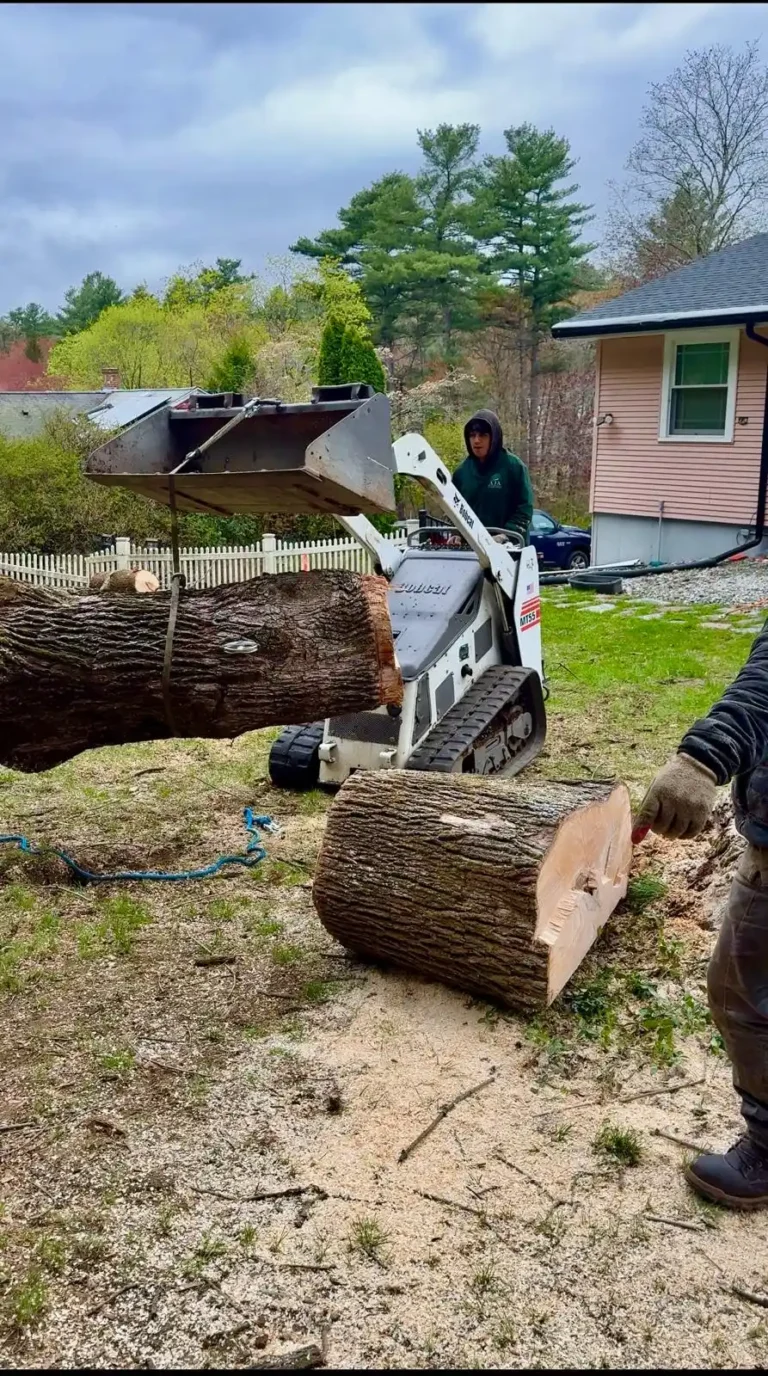
If your tree shows two or more of these signs, get it looked at. A hazardous tree removal scheduled in advance always costs less than the emergency version. AJA Landscaping Services offers free estimates in Massachusetts.